In 2018, the museum approached us about the idea of scanning a set of objects for the upcoming galleries and we gladly accepted. Using photogrammetry we made a number of the 3D models in the final set. So let’s talk a little about the project and the awesome objects we were tasked with scanning!
The new Medicine Galleries include three thousand objects and showcase some truly amazing medical items. They’re all about ‘exploring our relationship with medicine and health through more than 500 years of history’ and include the world’s first MRI scanner and Alexander Fleming’s penicillin mould!
The process
We’ve created over 20 commissions now, and many of them have included 3D digitisation as a service. This was a little different because the resulting models were to be viewed digitally (and not printed), but we still used the same photogrammetry techniques.
We worked closely with Digital Learning Producers Emilia McKenzie and Josh Blair, whittling down a list of possible objects from the Medicine collection based on their ‘scan-ability’. We looked at material, reflectivity, and size while Josh and Emilia came at it from strength of curriculum links.
Seeing images of the objects in advance really helps with that initial selection, but seeing an object in the flesh is even better, so it was useful to arrange a site visit at Blythe House to preview the objects. There are two major steps to making 3D models: Photogrammetric capture, and making the digital models.
Photogrammetric capture
Inside the treasure trove that is Blythe House where we did the image capture. The parquet flooring proved surprisingly helpful for image alignment!
We set our gear up in a corner of the stores and did image capture over two weeks, averaging about 3 objects per day. The chosen objects varied massively in size and complexity from a large wooden 18th century barber-surgeon’s chair, to a box of matches, to a cast iron baby-weighing scale.
It was great to get up close with the objects and be surrounded by so many other wondrous artefacts in the Blythe House stores. We love going behind the scenes at different museums, in fact it’s a large part of why we started the company in the first place, so visiting was a real treat for us!
Charlie capturing photos of the beautiful Leeches jar, fortunately it’s not so beautiful content has long since been removed!
Making the digital models
Having captured high-res images of all the artefacts we began the job of processing them into models using Agisoft’s Photoscan (now Metashape). A couple of the objects proved challenging owing to their complexity. Manufactured objects are usually more complicated then sculptural/hand-made things, so our models of sculptures tend to be quite forgiving as they’re one mass, whereas machine-made objects like the baby weighing scales or carbolic sprayer are not.
With their uniform metallic parts like nuts and bolts and pressed sheet metal failing to mesh well, areas of the models looked a bit “crunchy”. Accuracy was key for these objects as the detail helped explain their function.
Image Capture
Agisoft Mesh
Remodelling
Final retextured model
To solve this we recreated the object topology and remodelled several of the objects using the exported meshes of the original scans, and the photos as additional reference. After remodelling the objects to a suitably detailed level we could then import those to Metashape again for retexturing. The result is a neat model that represented the original and load quickly online.
The remodelled steam sprayer which was later animated by artist Sophie Dixon
The new 3D models
We produced 13 models which you can see on the museum’s Sketchfab page. Our favourites include
the leeches jar (which now features some gruesome animated leeches too),
Emilia and Josh also worked on providing useful supporting material as well such as scale (which is often overlooked with 3D models). There are also loads of discussion prompt questions like is it OK to exploit or harm animals to make humans better?
The Science Museum’s new learning resource site.
At Museum in a Box we’re obviously massive advocates for object-based learning! Mostly because objects are a great way to prompt questions, stimulate discussion and improve people’s critical thinking. What’s more, having a digital model or 3D print means you can move the object around and view it from all angles, something that’s just not possible with objects in a gallery setting.
Medicine: The Wellcome Galleries
We’re proud to have made a small contribution to the brand new Medicine: The Wellcome Galleries space at the Science Museum. It’s brilliant!
We were delighted to work on this digitisation project and play a part in growing the museum’s offering of digital resources. The Education team were great to work with and the outcome is a really well rounded set of resources that encapsulate the spirit of the new galleries perfectly!
We can provide 3D digitisation through our commissions so if you’re considering making a collection through Museum in a Box but don’t have the ability to do 3D in-house, do get in touch.
The Transatlantic Slavery and Its Contemporary Significance Collection
We’ve been busy working on many exciting commissions recently and plan to share a few more detailed insights into these over the coming weeks.
One such commission is with the International Slavery Museum in Liverpool, a collection we produced along with staff at the museum that explores transatlantic slavery, and its contemporary significance.
The collection consists of two 3D models and seven postcards and encompasses a range of artefacts from the museum’s collection. These include objects that would have been touched by African slaves, street signs connecting Liverpool to the slave trade, and contemporary art pieces.
Our rig for doing 3D photogrammetric capture
After settling on an object list, Charlie travelled up to the museum to 3D scan the two objects that were to be 3D printed. These were the Olaudah Equiano sculpture – a brilliant sculpture of writer, abolitionist and a former enslaved African, Olaudah Equiano by sculptor Christy Symington, and a Bamana mask – a type of mask used in Bamana culture used in traditional initiation societies in order to pass into adulthood. We printed them out in some brilliant bright yellow PLA, and were glad that so much detail of the original, including the shape of Africa on Olaudah’s back, broken shackles, and an enslaved female figure from the Brookes slave ship diagram were all visible on the print!
The audio in the collection incorporates narration from staff members including education demonstrators, curators, volunteers, and youth ambassadors. It’s great to hear such a variety of expert voices talk about the objects in such depth. Here’s a sample of one object in the collection, a ‘Talking Drum’, described by Yaz, one of the museum’s education demonstrators:
‘The Talking Drum’
An important distinction the collection highlights is the range of material held at the museum. This includes not only original objects but contemporary artworks too such as the Olaudah Equiano sculpture and The Cockle Pickers’ Tea Service.
‘Made in 2007 to commemorate 200 years since Britain enacted a law to outlaw the trans-Atlantic slave trade. The artwork references the original African victims, whilst also remembering twenty-one Chinese cockle pickers drowned in Morecambe Bay Lancashire in 2004. These people were contemporary slaves. A reminder that the slave trade is still alive in the twenty first century.’
Paul Scott’s ‘Cumbrian Blue(s), The Cockle Pickers’ Tea Service’ (2007)
We’re chuffed with how the set neatly encapsulate the museum’s broad collection, and that the box will be used to help increase awareness and understanding of the important stories it has to tell.
We can’t wait to hear how they get on with the box in the coming months!
Four museum staffers from Baghdad have just completed eight weeks in London in a top-to-bottom digitisation training program at the British Museum. The program was designed to develop skills in the digitisation of heritage collections, especially archives, and to make best use of digital resources to engage audiences in Iraq and beyond. We were thrilled when the BM team reached out to commission a Museum in a Box to encapsulate and represent the training.
We were excited to meet Samah (Educator), Safa (Photographer), Mustafa (Curator) and Thamir (Conservator) from the Iraqi Museum. Charlie and I visited the British Museum a couple of times, to help with object selection for the collection, and digitisation tips. We also helped gather and edit the audio scripts the team had written and recorded themselves, as part of the box production process. With the support of Jennifer Wexler at the BM, who helped prepare the 3D models for us, we also arranged to print four objects in 3D, and getting another 20 or so postcards printed and set up with their shiny yellow acrylic box. The resulting collection was a blend of objects from both institutions – we’re wondering how often that’s happened to date…
The training program was celebrated at a morning event in the wondrous Arched Room at the British Museum on April 13th. Each of the trainees gave a short talk about what they learned, and Thamir and Mustafah gave a live demo of the new Box! Apparently there were gasps in the audience, and we now have an (un)official endorsement from rockstar curator, Irving Finkel 🙂
Special outcomes for us
Our first deployment into another country, Iraq. (We were certain to offer to perform any technical follow-up in person!)
The first collection we’ve made that draws together objects from more than one institution
Our first commission in another language, Arabic (unless you count Frog as another language?)
We also have our first translation of the “starter kit” greeting scripts used in every box, translated by Safa and Mary (who was on the BM project team)!
Here’s the finished Arabic intro that plays when you first fire up the Box:
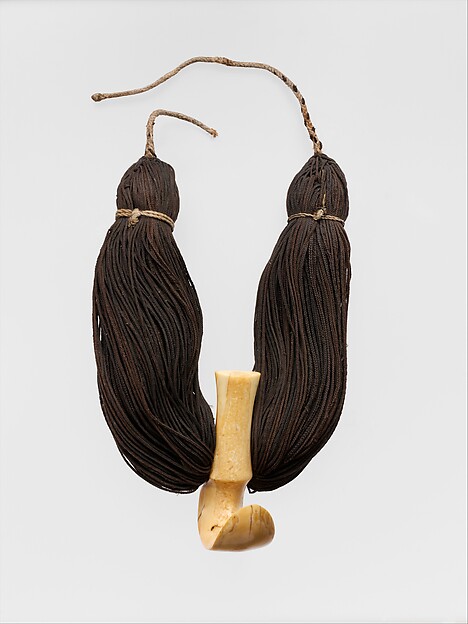
Today, we’re working on two prototype boxes: Greek Gods & Goddesses, and Haunted Objects. The research-y stage of making boxes is one of my favourites, because you get to range far and wide around a single object, in this case, we’re looking at a lei niho palaoa from Hawaii, which we found in the collection of The Met in New York.
I became interested in the question, “what did the object witness” during its lifetime… who wore it? where was it kept? what did it hear? who touched it? how did it end up in The Met? These questions led me to explore some Hawaiian music, and once you pass the ukulele song we all know and delve deeper, you find prayer songs like these…
We’re also working on the idea that each box will also contain a character, to help guide you around the set of objects, so we need to make some new figures we can print to include with the box. Of course, I volunteered my body to the cause, and Charlie has set about making a 3D model of me. I am in love with the work in progress of making a 3D model, especially when you see the object of focus in its surroundings, so shot a quick video so you can see it too:
I just love the look of this sort of thing. I’m surprised there’s not more art made around it.
The 31st July was the 100th anniversary since the start of the Battle of Passchendaele, and in the days leading up to the centenary a sculpture appeared in Trafalgar Square called The Mud Soldier. Created by Damian and Kilian Van Der Velden, the slumped soldier was crafted from sand mixed with mud from the fields of Passchendaele, and designed to slowly deteriorate, washing away in the rain. (It was also rigged with a watering system in case of dry spells, but turned out it was a rainy week!)
Transition from Day 2 to Day 4
It was a truly touching memorial and we ran down to Trafalgar Square several times to revisit the sculpture, as did many other Londoners and those who’d travelled from further afield to see it.
Day 2
Day 4
Given its temporary nature, we wanted to take the opportunity to make 3D captures of the sculpture in its different states and share those online. We did that on the second and fourth day (which was its last). Here’s the model from the second day…
… and here’s a small print of it we made:
The #MudSoldier was a fitting tribute to remembering the human cost of the First World War. It was lovely to see people who may normally rush across Trafalgar Square stopping in their tracks to observe the sculpture and take a moment to realise its meaning.
We were also thrilled to meet sculptor Damian Van Der Velden and two of the project organisers, Karen Roebuck and Pauline Steverlynck from Visit Flanders, Thank you for letting us loop around the installation snapping away to create the model!
Creating 3D from 2D
We were curious to try a sort of extrusion of some of the paintings in the box, and Tom worked to literally add a new dimension to works by Derek Jarman and others, to create a tactile version of each of the flat works.
Hands on, helpful user research
For us, a big part of the appeal of this partnership was the opportunity to conduct workshops with kids and their guardians in all the libraries we visited. We learned all sorts of things about putting the box in front of people who’d never seen it before, and faced a few teeth-clenching moments as the kids played with the 3D prints in unexpected ways (like making the Running Table try to pass through Barred Portal, which it turns out isn’t possible).
It was a pleasure to witness that first “what’s this magic thing?” look on people’s faces, and the general ease of use of the box. We also learned that the “cornucopia” display technique we’d used with more adults — where we spread lots of objects out and let people choose their own adventure — resulted in kids just wanting to try every object as quickly as possible to see what they’d say. In the later workshops, that led us to a more contemplative, steady demonstration, where we’d bring out one piece at a time, ask the kids about it, and then boop the object to see what happened.
We met lots of brilliant kids, but must give special mention to The Magnificent Balthazar, who we met at Swiss Cottage. He was very happy to sit with the objects and the box for well over an hour, and took the time to create his own rendition of each of the works in the box, all eight, and showed real artistic talent, even at just five years old! At one of the later workshops, run by artist Esther Springett, Angela & and her son, Lorenzo, came along, and enjoyed it so much they attended a second session. Angela even took the time to write a guest blog post on the Camden arts blog, where she reflected:
With 8 artists to choose from, Lorenzo chose the 3D printed ‘Cubes’ (Carl Heideken, 1973) and I have to say he totally surprised me with his creativity. After feeling the textures of the cubes and listening to an audio response to each object on special micro-chipped postcards, Lorenzo started to develop his own story about ’12 boxes 6 chances’. A 3D print definitely helped him to get a stronger connection with the piece.
It was brilliant to meet Angela and Lorenzo in person too, at the exhibition which opened in early May.
Exhibition!
This project was the first time that Museum in a Box ended up in an exhibition. It seemed a natural fit to exhibit all the prints, postcards and the box in the exhibition space. We created two versions to playback for visitors: the first was the “official” responses created by artists participating in the project, Esther, Ciara, and Jonathan. It was great fun to hear such creative responses coming out of the box when things were booped, instead of just a factual, wall-label-style rendition of information about each work.
The other set of postcards played responses made by the kids in each workshop. There were new stories and interpretations about each work, and, again, it was excellent fun to hear such creative takes on the art.
I must say, I did feel a bit strange about having the box locked down in an exhibition space, because it’s designed to be mobile, but once Charlie and I saw the superb installation Jonathan and Sophie had designed for the gallery space, my initial concerns disappeared quickly. Now we’re wondering how else a box might supplement a more traditional exhibition experience…
A Collaboration
We certainly didn’t complete this box in isolation, and it was a pleasure to collaborate with Sophie Rycroft and Samina Zahir from the Camden Arts team, Caroline Moore at the fabulous GOSH Arts, artist and gallery designer, Jonathan Miller, and last but not least, artist educators Esther Springett and Ciara Brennan, who surprised and delighted us mightily with their creativity and skill with kids.
The competition asked entrants to capture and modify an object that they use for their ‘favourite hobby’. We considered adapting a piece of our photography kit used for photogrammetry but opted instead for a more playful approach and hacked a scan of Ramesses II, one of the largest sculptures in the British Museum:
Next we were required to customise it to best suit our needs, it may seem surprising but we have quite a few 3D prints hanging around our Bloomsbury HQ yet few cool places to store them. Cue light bulb moment, why not make a giant Ramesses and use him to store a bunch of smaller prints!
We identified six scans that we could place within niches inside the big Ramesses including a smaller Ramesses bust (Ramception) and then got to work using Fusion 360 to modify the original scan.
First we had to reduce the polycount in order to open and edit the sculpture in Fusion which was then swiftly sliced in half. A hinge was then created by extruding a circle into a cylinder and splitting it into five parts which were then alternately combined to the front and back bodies. We also modelled a simple pin to lock the two halves together completing the hinge that would enable the secret stash of models to be opened and closed.
Ramesses Fusion 360 development
The final steps involved scaling-down and reducing the polycount of the six smaller models and positioning them where best, then all that remained was to trace a rough outline of each onto the flat plane, cut away each niche and insert the models.
We were fairly chuffed with the outcome especially when we threw on a jade material layer and rendered it through Fusion’s cloud rendering service. Content, we uploaded the model to MyMiniFactory and entered the competition.
Shiny jade render of Ramesses II
Unfortunately we didn’t win the competition otherwise we would almost certainly have our heads buried in VR right now but nevertheless we’re very happy with the outcome and the awesome job MyMiniFactory did of printing it!
The conference focused around the long-term durability and accessibility of 3D models and scan data for future uses, uses which as we discovered in some of the talks may not be immediately obvious. I thought I’d take a moment to reflect on a few thoughts and favourite take-aways.
Having a good understanding of photogrammetry (primarily by probing Tom for tips and tricks) I opted to skip the workshops and stick with talks for the whole day, it was intense but informative and an eye-opener into a community that I didn’t even know really existed! So… a few highlights:
Stuart Jeffrey from the Glasgow School of Art (GSA) discussed a use-case where an old 3D model of the GSA Mackintosh Building which suffered severe fire damage in 2014 provided evidence that a substantial lean on the West gable wall was historic and had not come about as a result of the fire. Members of the GSA Digital Design Studio produced a second model the day after the fire to compare the lean and save a large portion of the building from demolition an impressive feat and one which illustrated the importance of making good data accessible in the long-term.
Stuart Jeffrey from GSA
Anthony Corns from the Discovery Programme talked about his experiences of archiving and reusing 3D data as well as the steps and software involved in the creation of a model. One slide showed a standard software stack consisting of about 12 programmes which was somewhat surprising, working with Tom to process various models I am slowly but surely becoming aware and familiar with the wide range of tools out there.
Anthony also spoke about using scan data to asses pressure on different sites his example being Skellig Michael which has witnessed a surge in tourist numbers since Luke Skywalker decided to hang there in Star Wars: The Force Awakens. This also demonstrated when are where it may be appropriate to sell 3D data such as to film/production crews.
Chris Moran who heads the Wellcome Trust legal team gave an insightful talk on Intellectual Property Rights (IPR) an area where people often become a little tangled. I was listening from a design perspective so it was interesting to see examples where cases had been argued and won based on the potentially loose definitions of what constitutes something as an ‘original creation’ or even a database, his example being a newspaper’s website. Star Wars references were also utilised here in the form of the IP rights of a Stormtrooper’s helmet… I sense a pattern developing.
IP Rights with Chris Moran
Vincent Rossi and Jon Blundell of the Smithsonian appeared via Skype to discuss their work on digitisation and also show off their amazing work on the Apollo 11 command module ‘Columbia’ check it out here.
Vincent Rossi and Jon Blundell all the way from America
I had the opportunity to ask a question to our speakers from across the pond which was kinda cool!
Finally perhaps the most insightful moment was the final ‘Round-up chat’. Here following a panel chat the audience were invited to reflect on: what is to be done and how to address the gaps in our knowledge?
A final panel chat
It was clear there was a desire for good collaborative practise and several rousing speeches were made, there was a great deal to get off the chest! A key agreement was that to work with better tools and formats, instead of trying to create new ones, complain about a lack of essential features, and live in fear of formats going extinct, why not establish a line of communication with the developers and those behind the existing platforms. The software stack slide that Anthony showed sprung to mind and it became apparent there was a need for openness and better communication between all parties involved in 3D work not just in the short term and not just for individuals and independent organisations but the community as a whole.




 We met lots of brilliant kids, but must give special mention to The Magnificent Balthazar, who we met at Swiss Cottage. He was very happy to sit with the objects and the box for well over an hour, and took the time to create his own rendition of each of the works in the box, all eight, and showed real artistic talent, even at just five years old! At one of the later workshops, run by artist Esther Springett, Angela & and her son, Lorenzo, came along, and enjoyed it so much they attended a second session.
  I must say, I did feel a bit strange about having the box locked down in an exhibition space, because it’s designed to be mobile, but once Charlie and I saw the superb installation Jonathan and Sophie had designed for the gallery space, my initial concerns disappeared quickly. Now we’re wondering how else a box might supplement a more traditional exhibition experience…


.jpg)
You must be logged in to post a comment.